
Lenoir County Probate Records
North Carolina probate is handled by the Clerk of Superior Court. Lenoir County does not have a stand-alone probate court. North Carolina law makes the Clerk of Superior Court the ex officio judge of probate for estate administration, settlement, and distribution. Local estate matters route to the Lenoir County Clerk of Superior Court at the Lenoir County Courthouse, 130 S Queen Street, Kinston, NC 28501. The clerk's phone number is 252-520-5300.
Probate covers the administration of money and property owned at death. Lenoir County estate files may include wills, applications, letters testamentary or letters of administration, inventories, accountings, notices, orders, fiduciary filings, and closing documents. A will has no legal effect until it is probated by the court, usually through the Clerk of Superior Court. Once a decedent's will is filed after death, it becomes a public record unless a specific restriction applies.
The official North Carolina Judicial Branch estates guide is the state source for estate administration terms and filing routes.
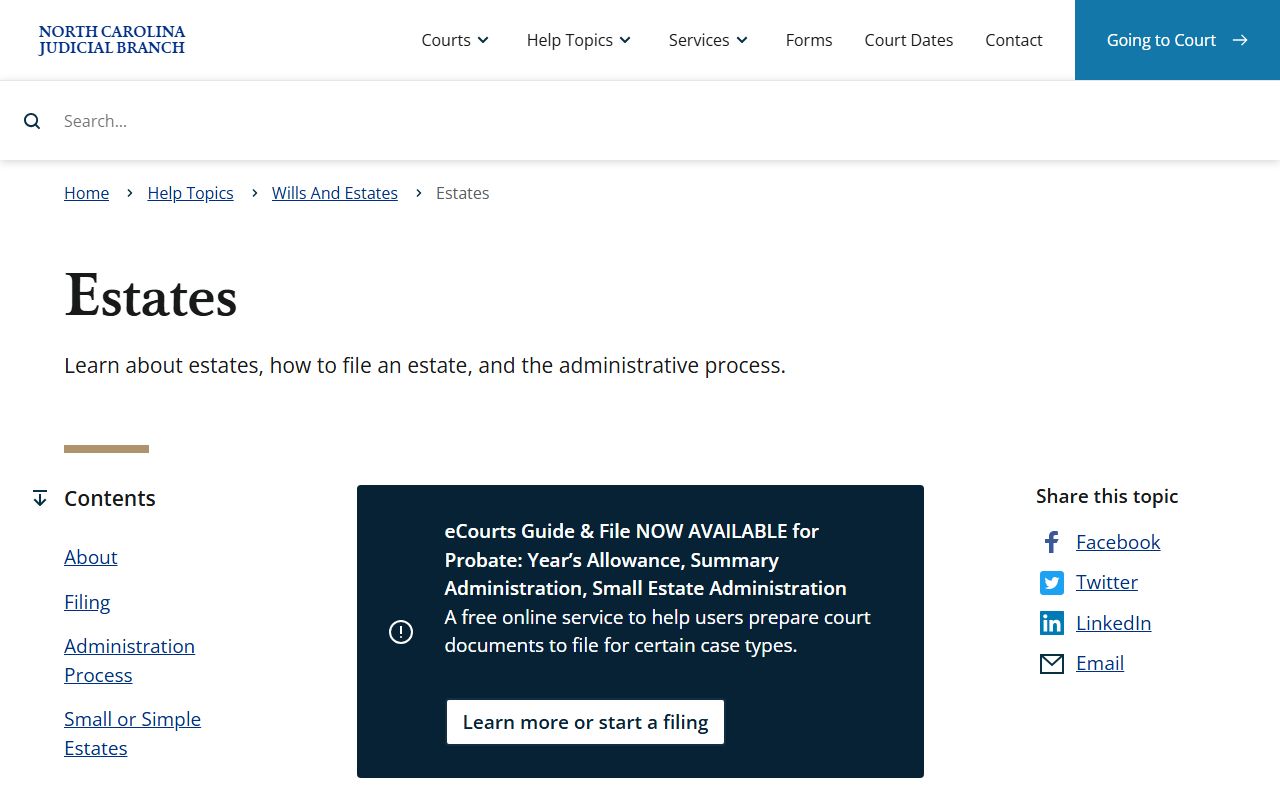
That statewide guidance fits Lenoir County because the same Clerk of Superior Court structure applies at the county courthouse in Kinston.
Estates Division of the Clerk of Superior Court
130 S Queen Street
Kinston, NC 28501
252-520-5300
Mail: PO Box 68, Kinston, NC 28501
Monday-Friday, 8:00 a.m.-5:00 p.m.
Probate Terms Defined
Estate filings use terms that are easy to confuse. These definitions help separate the person who died, the person in charge of the estate, and the documents that give that person authority.
- Testator
- A person who made a will.
- Executor
- The person named in a will to carry out estate duties after qualification.
- Intestate
- Dying without a valid will, which can shift appointment priority to heirs and other eligible people.
- Guardianship
- A court-supervised arrangement for a person or estate when legal authority is needed to act for another person.
- Conservatorship
- A protective financial role used in some jurisdictions; North Carolina estate research for this project focused on clerk estates and guardianship-related records rather than a separate conservatorship court.
Estate Assets and Wills
Probate assets can include vehicles, bank accounts, securities, furniture, jewelry, and personal property owned by the decedent at death. Non-probate assets can pass outside estate administration, such as survivorship property, accounts or policies with beneficiaries, life insurance, retirement accounts, joint accounts, and annuities. Real estate usually does not pass through estate administration unless the will says otherwise or a sale is needed to pay debts.
The distinction matters for Lenoir County probate records because a clerk estate file may not list every item a person owned. A bank account with a beneficiary may pass outside administration, while a vehicle titled only in the decedent's name may need estate handling. Estate records are best read as filings tied to administration, not a full biography of all family property.
The Application for Probate and Letters Testamentary/Of Administration CTA is one of the core forms used to begin a formal estate path.
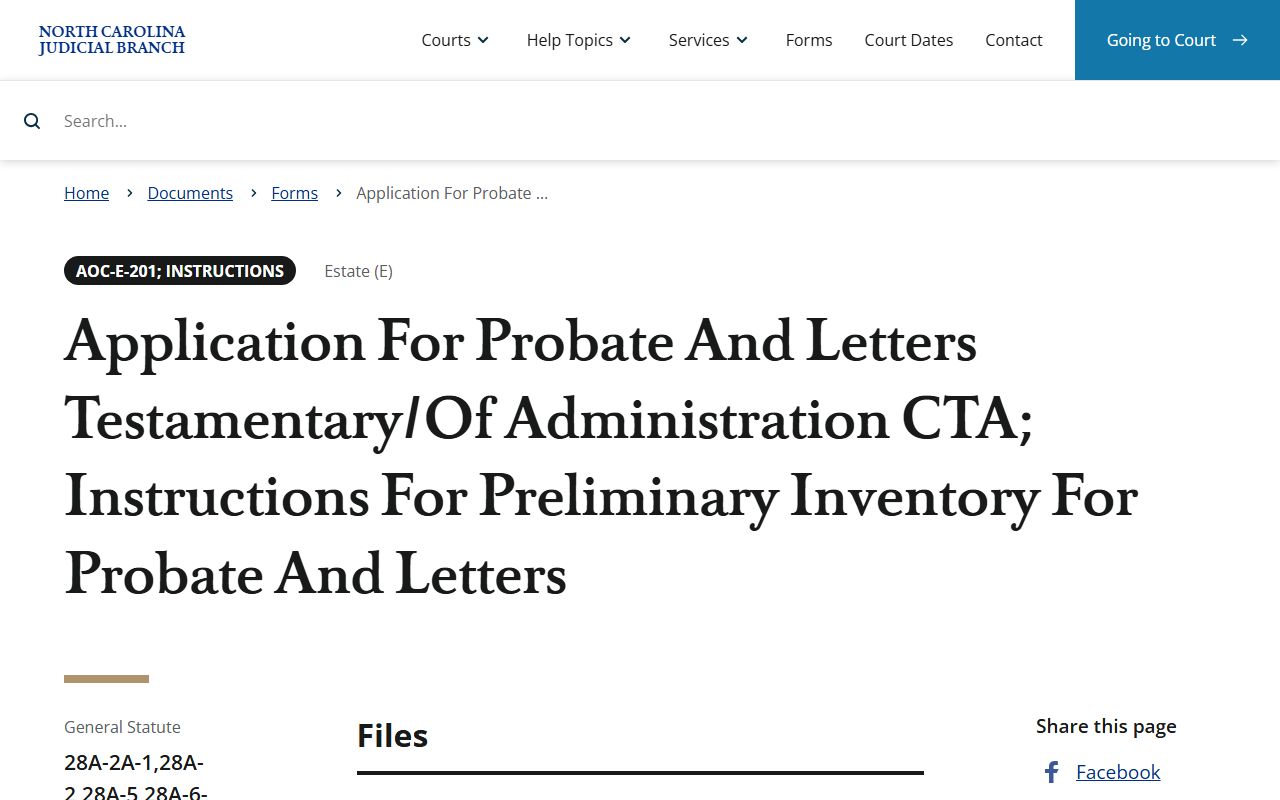
That application connects the personal representative's authority to the Lenoir County estate file maintained by the clerk.
Start Lenoir County Administration
Estate administration usually starts by visiting the appropriate Clerk of Court. For Lenoir County, that means the Clerk of Superior Court in Kinston when venue belongs in Lenoir County. Venue is usually the county of domicile at death. For a nonresident decedent, venue can be any North Carolina county where property or assets exist.
A person starting an estate should bring the will if one exists, a certified death certificate, the application and preliminary inventory, and the filing fee. The application and inventory require general knowledge of the decedent's property and the identity of heirs or devisees. A devisee is a person or entity named to receive property under a will.
- Confirm that Lenoir County is the proper venue based on domicile or North Carolina assets.
- Gather the will, certified death certificate, heir or devisee information, and a preliminary list of property.
- Contact the Clerk of Superior Court at 252-520-5300 for estate filing instructions and current payment details.
- File the application, inventory, and required fee with the Estates Division of the Clerk of Superior Court.
- Request letters after qualification if authority is needed to act for the estate.
Letters and Representatives
Letters testamentary and letters of administration are legal documents that give a personal representative authority to act for an estate. If the will names an executor, that person has first priority to qualify. If no executor qualifies, priority can move to a successor executor, surviving spouse, devisees, heirs, next of kin, creditors, or a person of good character living in the county.
Out-of-state executors generally need bond, and administrators also need bond unless an exception applies. Bond is a financial safeguard tied to the representative's duties. A personal representative may need letters to collect estate assets, talk to banks, transfer property, publish or handle creditor claims, file inventories, and complete accountings.
Note: Letters are authority documents; they are not the same as a copy of the will.
Small Estate Options
Not every Lenoir County estate requires full administration. Smaller estates may use an affidavit for collection of personal property. Summary administration may apply when a surviving spouse is the sole heir or devisee. These options can reduce the amount of filing and oversight needed, but they still depend on the facts of the estate and the clerk's approval.
North Carolina eCourts Guide & File offers probate interviews for Year's Allowance, Summary Administration, and Small Estate Administration. Those tools can help prepare forms, but filing still belongs with the clerk in the proper county. If a will exists, it should be brought to the clerk so the probate question is handled before estate property is distributed.
Lenoir County Estate Inventory
Inventories help the clerk and interested persons understand what property is part of the estate. The inventory can include cash, bank accounts, vehicles, securities, household goods, and other personal property. Real estate may be treated differently, especially when it passes outside estate administration or is not needed to pay debts.
The official Inventory for Decedent's Estate form is a key Lenoir County probate record source because it shows how assets are reported to the clerk.
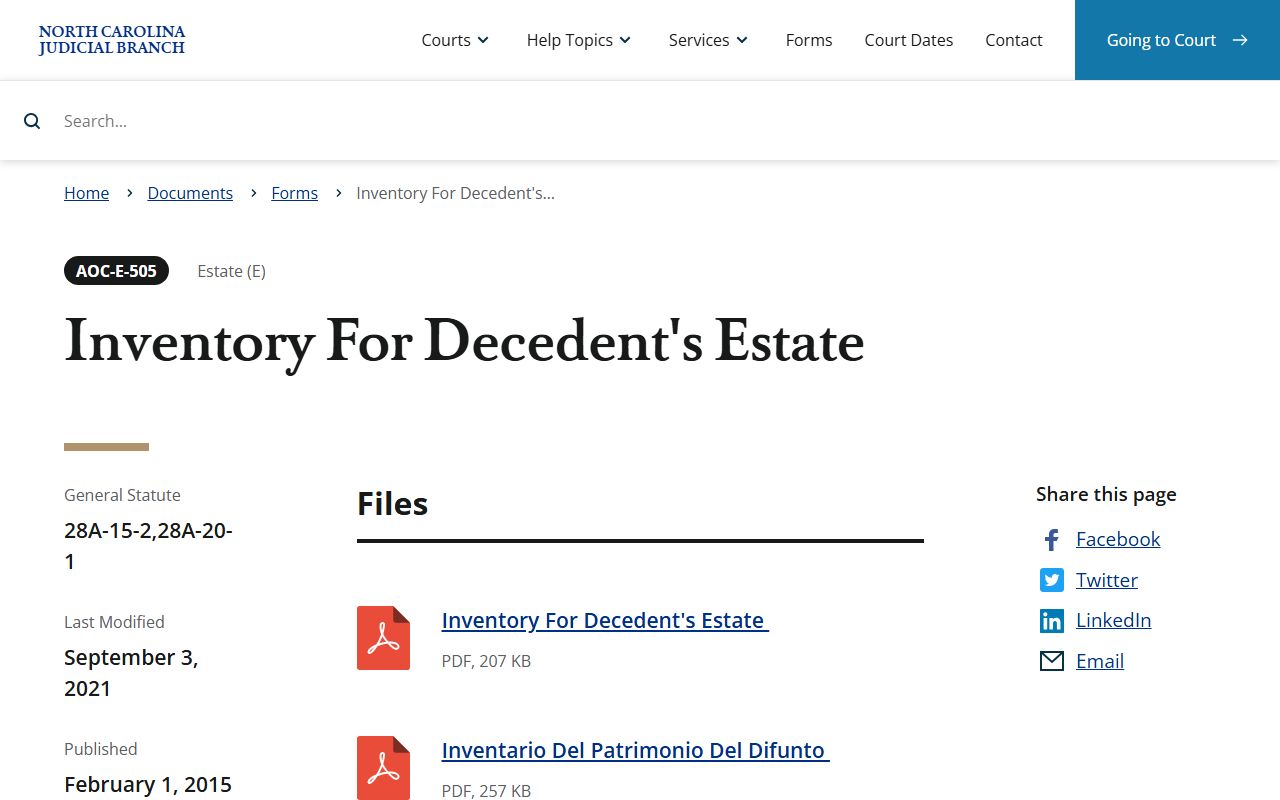
An inventory is not just a search aid. It is part of the estate administration record and can affect creditor, heir, and accounting questions.
Lenoir County Probate Fees
Estate costs come from the North Carolina estates cost chart. The figures below come from the 2026 estate costs listed in the research. Confirm current totals with the Lenoir County Clerk of Superior Court before filing because gross estate value, service needs, and added petitions can change the amount due.
| Estate Fee Item | Amount |
|---|---|
| New estate administration / estate proceeding total | $120.00 |
| Gross estate fee | $0.40 per $100.00 |
| Gross estate minimum | $15.00 |
| Gross estate maximum cumulative | $6,000.00 |
| Caveat for decedents dying on/after Jan. 1, 2012 | $200.00 |
| Elective share petition for decedents dying on/after Dec. 1, 2020 | $200.00 |
| Application for administration by Clerk | $20.00 |
| Probate of will without qualification total | $30.00 |
| Collection of personal property by affidavit | $120.00 plus gross estate fee |
| Sheriff civil process service fee | $30.00 |
Search Lenoir County Estate Records
Estate information may be available through clerk public terminals or the NC eCourts Portal where public and indexed. Still, estate records are often document-heavy, and a Portal result may not include every filed paper. Certified copies, older files, restricted questions, and complete file review should go through the Clerk of Superior Court.
Search by the decedent's name, estate file number if known, personal representative, or related party information. If an online search does not return a result, contact the clerk. The estate may predate online indexing, be filed under a name variant, be pending paper processing, or require in-person review.
| Search Channel | Best Use | Limit |
|---|---|---|
| NC eCourts Portal | Public indexed case and estate information | May not show full documents |
| Clerk public terminal | Public courthouse search by name or file number | Requires courthouse access |
| Clerk office request | Certified copies, older files, complete estate file questions | Fees and processing apply |
Federal Records Near Probate
Most Lenoir County probate records are state court estate records, not federal records. Federal courts can still matter when an estate has a related federal civil case, bankruptcy issue, tax dispute, or asset litigation. Lenoir County is in the Eastern District of North Carolina for federal district and bankruptcy coverage.
The U.S. District Court for the Eastern District of North Carolina is the federal civil and criminal court for the district.
A federal district case does not replace the Lenoir County estate file, but it may explain a dispute involving estate property or parties.
For federal electronic filing, the EDNC CM/ECF system is the official filing and docket system for federal district matters.
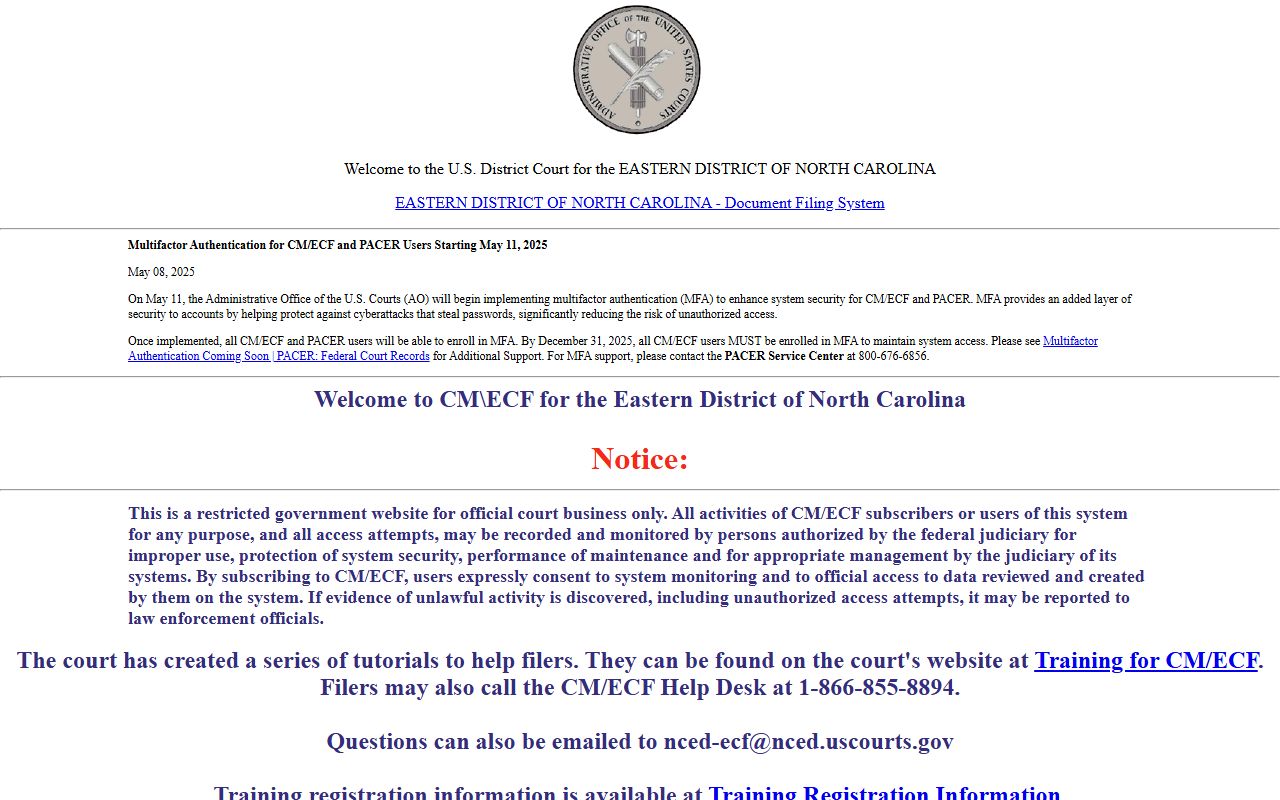
Federal docket access has separate account and fee rules from the county clerk's probate file.
The U.S. Bankruptcy Court for the Eastern District of North Carolina may be relevant when the decedent, heirs, creditors, or estate-related parties have bankruptcy proceedings.
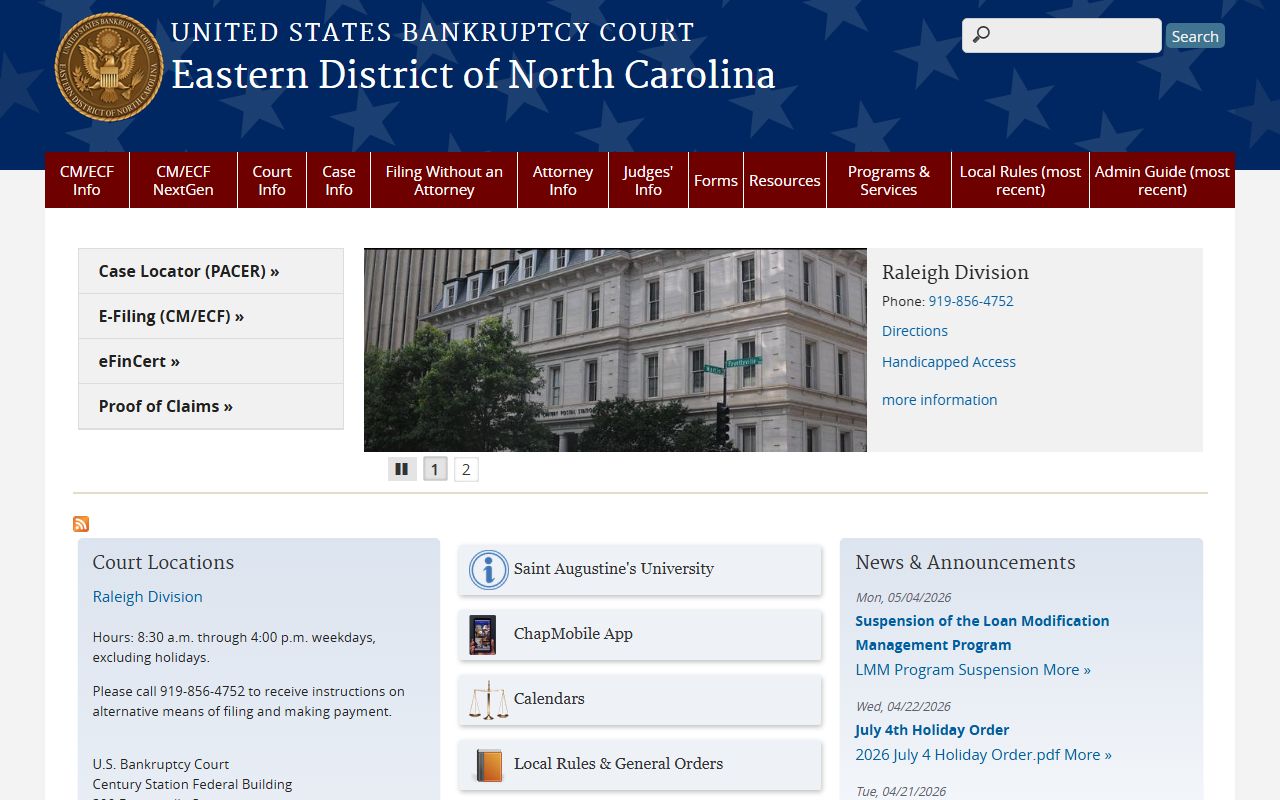
Bankruptcy records should be searched separately from the Lenoir County Estates Division records because they are federal court files.
Restricted Probate Records
Many estate filings are public after filing, including a probated will. Access can still be limited for protected personal identifiers, sealed materials, guardianship or incompetency records, minor-related information, and documents restricted by court order or statute. A public estate file may also contain redactions.
The safest access rule is to separate public estate administration records from sensitive related proceedings. Wills, applications, inventories, accountings, and orders may be viewable for a fee unless restricted. Guardianship and incompetency records can contain medical, financial, or personal details that are not treated like ordinary public estate records.