
How to Search Lenoir County Court Records
The main online search channel for Lenoir County court records is the NC eCourts Portal. Lenoir County went live on eCourts as part of the Track 8 rollout on April 28, 2025, so current public case information, hearings, judgments, eligible payment records, and some public documents now appear through the statewide Portal. Because the Portal searches across North Carolina, use the location filter when the search should be limited to Lenoir County.
Portal access is only one channel. The NC Judicial Branch court-record guidance also points users to public self-service terminals in clerk offices and to paper files in the county where the case is located. For Lenoir County, that fallback is the Clerk of Superior Court at the county courthouse. Certified copies, older records, unclear results, and files not online should be handled through the clerk rather than through a screenshot from the Portal.
- Open the NC eCourts Portal and choose the search tool that fits the task, such as Smart Search, Search Hearings, Make Payments, or judgment search.
- Search by exact case number when possible. North Carolina Enterprise Justice case numbers can use a two-digit year, case type letters, a six-digit sequence, and a county identifier.
- For a person search, enter last name and first name. Portal wildcard guidance allows at least three last-name characters plus an asterisk and at least one first-name character plus an asterisk.
- Use advanced filters to narrow the location to Lenoir County and add case type, status, party, date, or filing filters when known.
- Open the result and review the court location, parties, case status, events, hearings, dispositions, financial entries, and public documents that are available.
- Contact the Clerk of Superior Court when the record is missing, incomplete, sealed, confidential, older, or needed as a certified copy.
The NC eCourts Make Payments screen is one Portal path tied to eligible fines, costs, and citations. A payment match is not the same as a complete case file, but it can help confirm a citation or case number before a clerk request.
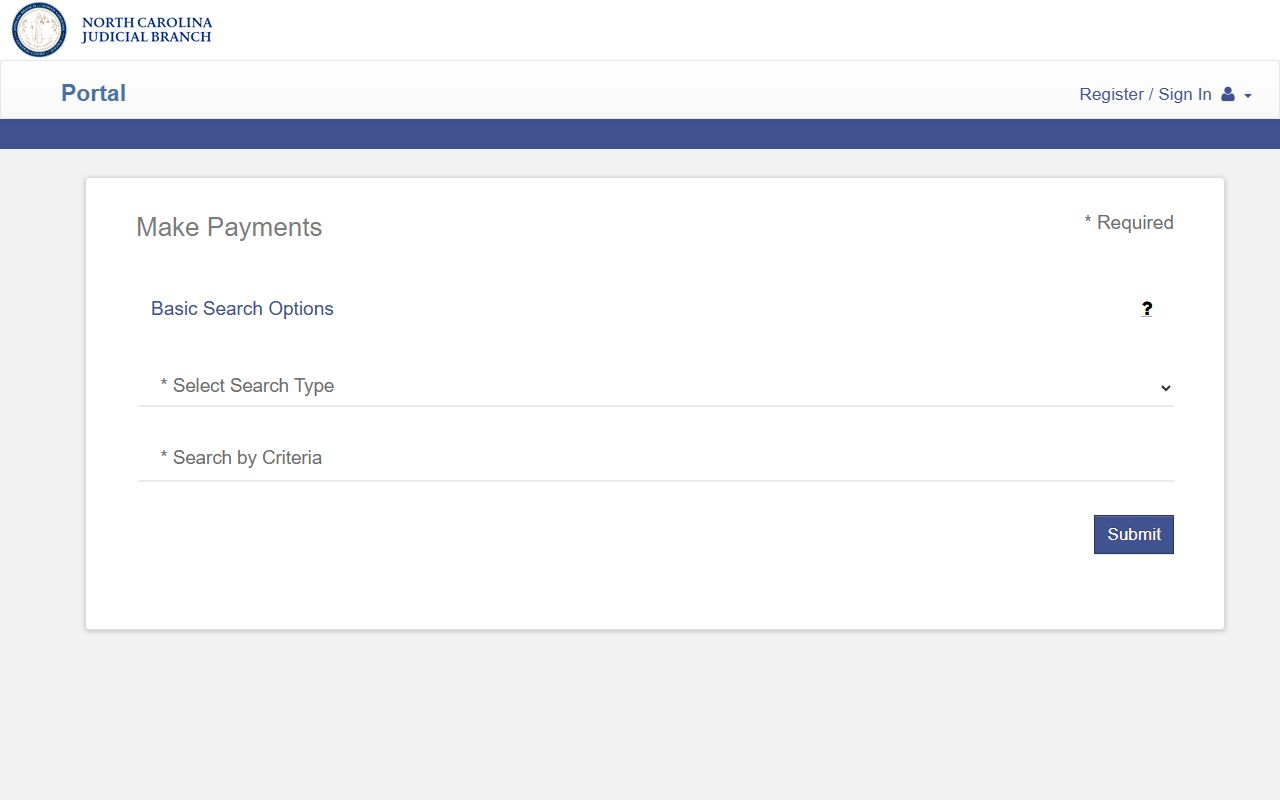
Payment search results should be read with the rest of the case record because financial eligibility can change after hearings, continuances, or clerk action.
Lenoir County Court Records Search Fields
Smart Search is the broadest Portal entry point for Lenoir County court records. It can take a case number, party name, business name, or nickname depending on the selected search mode. The best search starts narrow, then expands. If a full name returns too many statewide matches, add Lenoir County as the location and use filing-date, case-status, or case-type filters. If a full name returns nothing, try the Portal wildcard format or search by case number from a citation, notice, or clerk receipt.
| Field Label | Type | Required | Notes / Format |
|---|---|---|---|
| Record Number or Name | Text | Required for basic search | Accepts case number, party name, business name, or nickname depending on mode. |
| Last Name | Text | Conditional | Wildcard searches can use at least three characters plus an asterisk. |
| First Name | Text | Conditional | Wildcard searches can use at least one character plus an asterisk. |
| Middle Name / Suffix | Text / dropdown | Optional | Useful for common names and suffix validation. |
| Filter by Location | Dropdown or multi-select | Optional but important | Select Lenoir County to narrow statewide results. |
| Search By | Radio or dropdown | Optional | Party name, nickname, business name, or sounds-like search. |
| Date of Birth From / To | Date | Optional | Advanced party filter when public and available. |
| Case Type / Case Status | Dropdown | Optional | Advanced case filters for civil, criminal, traffic, family, estate, or status limits. |
| File Date Start / End | Date | Optional | Limits results by filing-date range. |
| Search / Clear | Button | Not applicable | Runs the search or resets the form. |
Types of Lenoir County Court Records
Lenoir County court records come from Superior Court, District Court, magistrate work within District Court, and the Clerk of Superior Court's estate and special-proceeding functions. North Carolina does not give Lenoir County a separate county court or municipal court search system for ordinary criminal, civil, or traffic cases. Kinston, La Grange, and Pink Hill law-enforcement records may exist at those agencies, but the court case is part of the state court system once filed.
Civil records can include complaints, answers, motions, orders, service returns, judgments, notices, docket entries, and financial entries. Criminal records can include warrants, magistrate orders, citations, indictments, bond conditions, pleas, trial entries, dispositions, sentences, costs, restitution, and appeals. Family and domestic records may include divorce, custody, support, equitable distribution, and protective-order matters, with sensitive filings restricted or redacted when required. Estate files are handled by the Clerk of Superior Court acting in the probate role.
- Civil and special proceeding records show claims, parties, service, orders, judgments, liens, foreclosures, partitions, and related filings.
- Criminal and traffic records show charges, citations, hearings, pleas, dispositions, sentences, costs, and payment eligibility.
- Family and domestic records show divorce judgments and other domestic case activity, subject to privacy limits for sensitive material.
- Estate and probate records show wills, applications, fiduciary letters, inventories, accountings, notices, and orders.
- Juvenile, adoption, mental-health, expunged, and sealed records are not ordinary public records.
What Lenoir County Court Records Show
Public case results vary by case type and access level, but a Lenoir County court record usually starts with identifying data and then follows the case through events, hearings, filings, and outcome. A docket entry is the running history of what happened. A document is the filing or order itself. Some records show both; others show only the event history and require a clerk request for the underlying paper or scanned document.
| Field | What It Shows |
|---|---|
| Case Number | The unique court identifier assigned to the Lenoir County case. |
| County / Location | The county and court location connected to the file. |
| Division | Superior Court, District Court, magistrate, estates, or special proceeding context. |
| Case Caption | The formal title, such as State v. defendant or plaintiff v. defendant. |
| Parties and Attorneys | Names of parties, roles, counsel, and represented parties when public. |
| Filing and Offense Dates | When the case opened and, for criminal or traffic cases, the alleged incident date. |
| Hearings | Dates, times, courtrooms, hearing types, sessions, and judicial officers where shown. |
| Docket Entries | Chronological filings, notices, continuances, orders, judgments, and case events. |
| Disposition and Judgment | The outcome, sentence, civil judgment, dismissal, plea, or other result. |
| Financials | Court costs, fines, restitution, attorney fees, balances, and payment eligibility. |
Public Access for Lenoir County Court Records
North Carolina court records are shaped by both public-record law and court-specific statutes. Chapter 132 of the North Carolina General Statutes states the broad public-record rule, while NC Gen. Stat. 7A-109 directs clerks to maintain court records, files, dockets, indexes, and judgments. For Lenoir County, that means public court records are searched through the Portal, public terminals, and the Clerk of Superior Court, not through a county-created private index.
Public access has limits. NC Gen. Stat. 132-1.4 treats criminal investigation and intelligence records differently from court files. The official statute page below is assigned to Lenoir County court records because it explains why a case file may be public while the police narrative, investigative detail, or sealed law-enforcement material is not released in the same way.
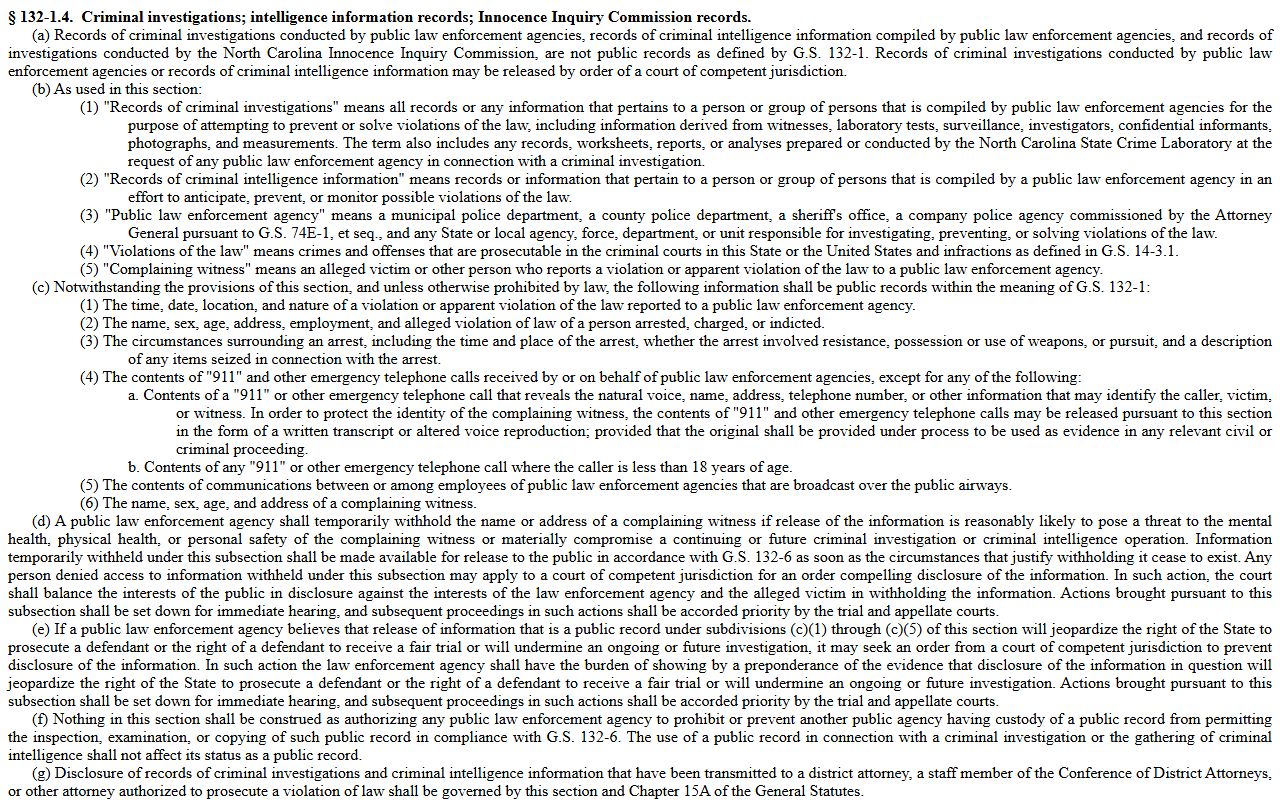
This distinction matters when comparing a Clerk of Superior Court case file with a sheriff or police report. The court record may show the charge, hearing, and disposition, while investigative material can stay withheld or redacted under law-enforcement rules.
Note: Portal results and public-terminal records are useful for lookup, but certified copies must come from the Clerk of Superior Court.
Restricted Lenoir County Court Records
Restricted records should not be treated as ordinary searchable files. Juvenile delinquency, abuse, neglect, and dependency records are restricted by NC Gen. Stat. 7B-3000. Adoption files, many mental-health proceedings, protected addresses, victim-identifying details, Social Security numbers, full financial account numbers, minor identifiers, and sealed filings can also be withheld or redacted. Public search tools may show less than the full clerk file, and the clerk may need to review access before releasing a copy.
The juvenile confidentiality statute is one of the clearest limits on public Lenoir County court records.
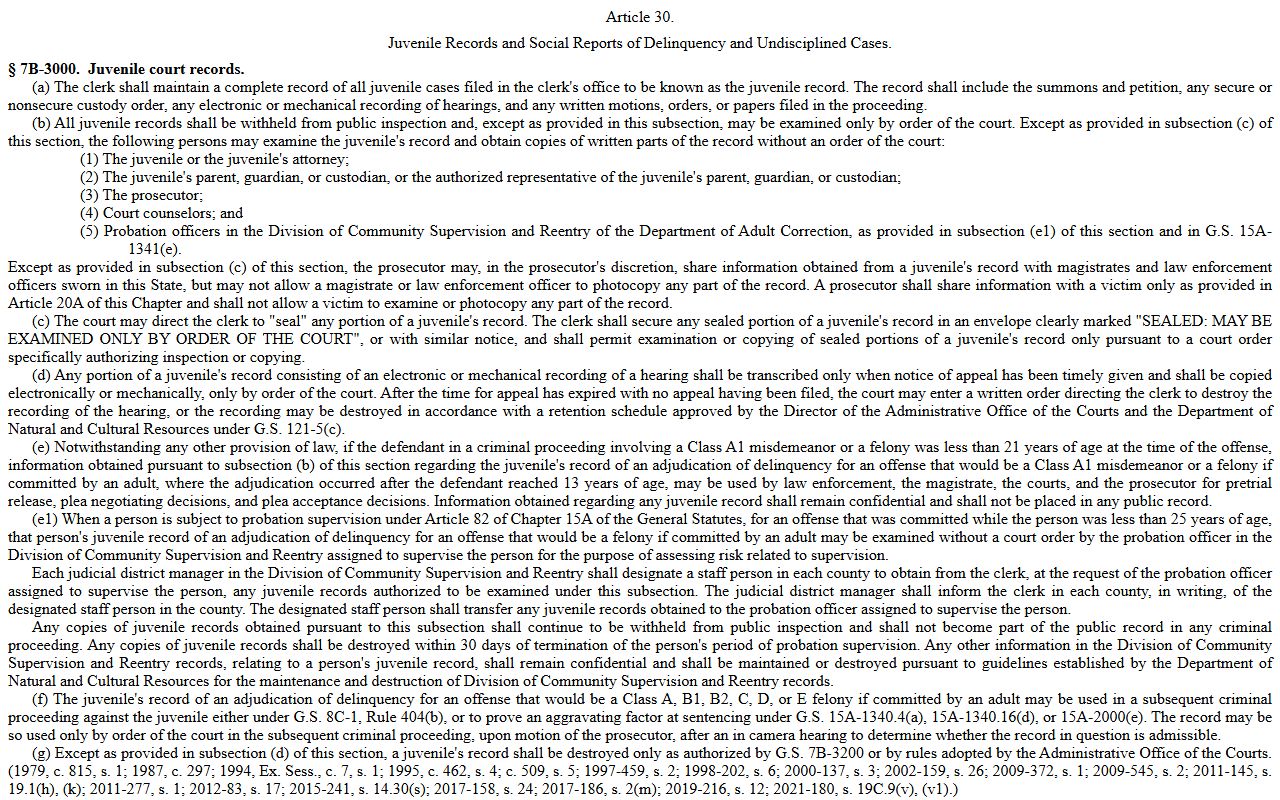
Juvenile record limits are separate from adult criminal case access, so a missing juvenile result in the Portal should not be read as proof that no restricted file exists.
Expunction is another access limit. Under NC Gen. Stat. 15A-145.5, certain eligible misdemeanors and felonies may be expunged when statutory conditions are met. An expunction is not a website correction request. It is a court process that can restrict ordinary public access after a judge grants the petition and agencies process the order.
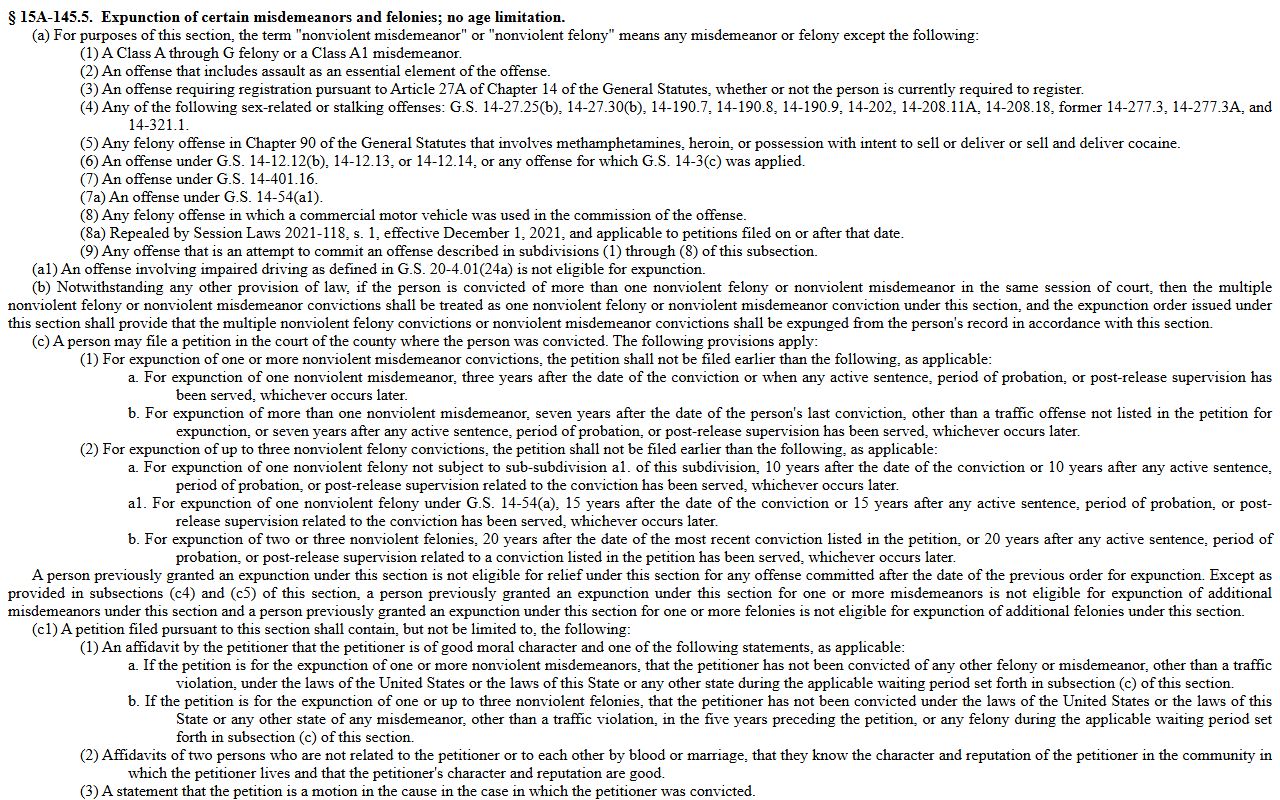
When a Lenoir County case has been sealed or expunged, public lookup tools may return limited information, no public result, or a result that does not include the restricted documents.
Lenoir County Court Record Requests
The Clerk of Superior Court is the local court record custodian for Lenoir County. The clerk maintains Superior Court and District Court files, civil actions, criminal case files, traffic and infraction records, domestic cases, divorce judgments, estate files, special proceedings, small-claims appeals, judgments, liens, and indexes. The clerk is also the practical source for certified copies, complete paper files, older matters, and record-access questions that cannot be resolved online.
Lenoir County Clerk of Superior Court
Lenoir County Courthouse
130 S Queen St
Kinston, NC 28501
Mail: PO Box 68
Kinston, NC 28501
252-520-5300
Monday-Friday, 8:00 a.m.-5:00 p.m.
Bring or provide the case number when known, the party name, the record type, and the needed copy type. Certified copies may require clerk fees set by statewide court-cost law. If the case is not public, the clerk can explain whether access is limited by statute, court order, party status, or another rule.