
How to Search Lenoir County Court Records
The main online starting point is the NC eCourts Portal. Lenoir County joined eCourts in the Track 8 rollout on April 28, 2025, so public case lookup, hearing search, judgment search, and many eligible payments now run through the statewide Portal. Searchers should filter by Lenoir County when the Portal offers a location filter because the same system covers many North Carolina counties.
The Portal is not the only access channel. The NC Judicial Branch court-record guidance says criminal case information can also be searched from public self-service terminals in a clerk's office, and paper files can be viewed at the clerk's office in the county where the case is located. For Lenoir County, that means the Clerk of Superior Court at the courthouse in Kinston.
- Open the NC eCourts Portal and choose Smart Search, Search Hearings, or Make Payments based on the task.
- Search by exact case number when known, or use last name and first name for a party search.
- Use advanced filters to narrow results to Lenoir County, case type, status, filing date, or party details.
- Review public case events, hearings, status, dispositions, financial entries, and public documents where available.
- Contact the Lenoir County Clerk of Superior Court for certified copies, older paper files, sealed-file questions, or missing results.
The NC Judicial Branch Lenoir County page is the official local court landing page for county-specific court services.
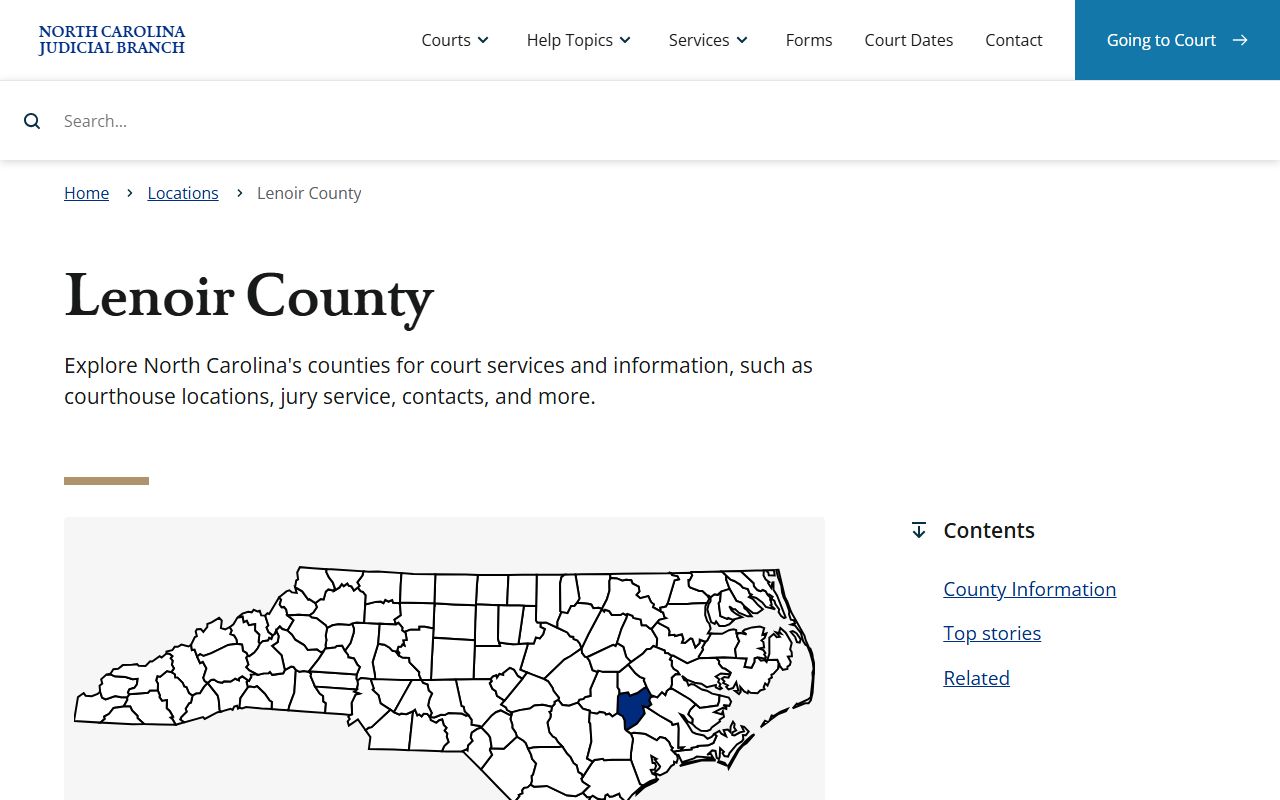
That local court page is useful when a Lenoir County court record search needs official courthouse links instead of only a case-search screen.
Lenoir County Court Search Fields
Portal searches work best when the search terms match court data closely. A case number is usually the cleanest path. Name searches can work, but common names may return many records. Portal training notes also allow wildcard searches with enough letters from a last name and first name.
| Field | Type | Use | Format Notes |
|---|---|---|---|
| Record number or name | Text | Basic search | Case number, party name, business name, or nickname |
| Last name and first name | Text | Party search | Wildcard search can use at least three last-name letters plus an asterisk |
| Location | Filter | County narrowing | Select Lenoir County when available |
| Case type and status | Filter | Result sorting | Useful for civil, criminal, traffic, family, or estate matters |
| File date range | Date | Date narrowing | Use when the filing period is known |
The Portal training and resources page gives statewide help on search modes, wildcard use, public access limits, and case-number format.
Training notes matter because a failed name search does not always mean there is no Lenoir County court record.
Inside Lenoir County Courts
Lenoir County belongs to Prosecutorial District 9, Superior Court District 9A, and District Court District 9. The county does not have a separate county court, justice court, or Kinston municipal court case-search system for ordinary criminal, traffic, civil, or domestic court matters. Those matters route through the North Carolina Judicial Branch.
Superior Court handles felony criminal cases, civil cases over $25,000, and appeals from District Court in misdemeanor and infraction matters. District Court handles misdemeanors, infractions, traffic cases, juvenile matters, domestic cases, small claims appeals, and many civil matters assigned to that division. Magistrates work within the District Court structure and handle warrants, initial appearances, small claims, and summary ejectment.
| Court or Office | Lenoir County Role | Common Records |
|---|---|---|
| Superior Court | Trial division | Felonies, higher civil cases, appeals from District Court |
| District Court | Trial division | Misdemeanors, infractions, traffic, juvenile, family, lower civil cases |
| Magistrates | District Court judicial officers | Warrants, initial appearances, small claims, summary ejectment |
| Clerk of Superior Court | Record custodian and probate judge | Court files, estates, judgments, certified copies, indexes |
| North Carolina Court of Appeals | Intermediate appellate court | Appeals from trial-court judgments |
Case flow: Magistrate or filing event › District Court or Superior Court › Clerk record › North Carolina Court of Appeals when an appeal is taken.
Lenoir County Courthouse
The Lenoir County Courthouse is the local access point for Superior Court, District Court, magistrates, the Clerk of Superior Court, estate filings, traffic and criminal matters, civil files, divorce judgments, docket questions, and certified court copies. The official courthouse page lists rear parking and says courthouse access is on the right side of the building from the parking places near the magistrate office.
Lenoir County Courthouse
130 S Queen St
Kinston, NC 28501
252-520-5300
Monday-Friday, 8:00 a.m.-5:00 p.m.
The official courthouse page also notes that the small-claims courtroom moved to the first floor in the former County Commissioners Meeting Room.
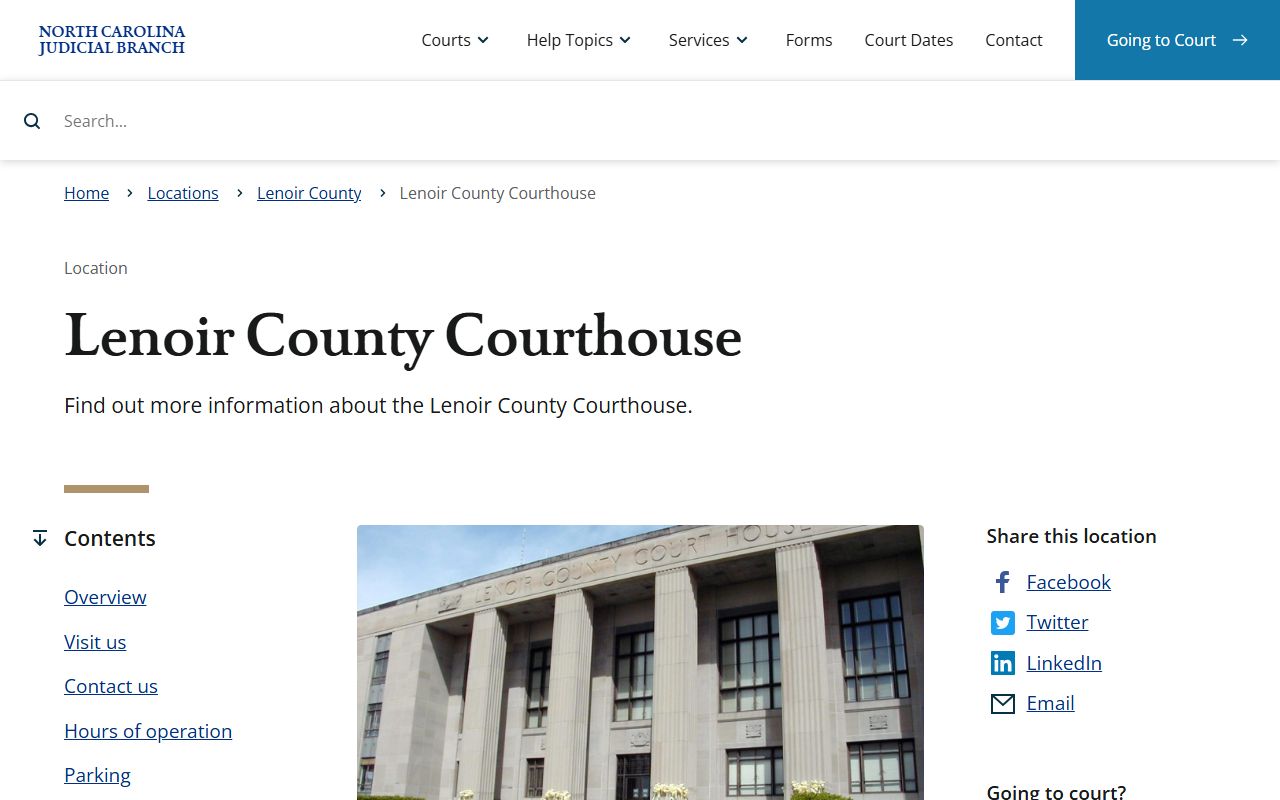
That relocation note is important for small claims, summary ejectment, and other District Court matters that bring visitors to the courthouse in Kinston.
Lenoir County Court Record Types
Lenoir County court records can include civil, criminal, traffic, domestic, estate, judgment, lien, and special proceeding files. Civil files can include complaints, answers, motions, service papers, orders, judgments, and notices. Criminal files can include warrants, magistrate orders, citations, indictments, bond conditions, pleas, motions, dispositions, judgments, sentences, and probation terms.
Divorce judgments are court records handled through the Clerk of Superior Court, while marriage licenses and marriage certificates are handled by the Register of Deeds. Estate administration is handled by the Clerk of Superior Court acting as probate judge. Juvenile cases, adoption files, mental-health proceedings, sealed cases, and expunged records are not treated like ordinary public case files.
- Civil records: complaints, motions, orders, judgments, and service entries.
- Criminal records: charges, pleas, hearings, dispositions, sentences, costs, and probation terms.
- Traffic records: citations, waiver eligibility, court dates, dispositions, fines, costs, and failures to appear.
- Domestic records: divorce, custody, support, equitable distribution, and protective-order matters.
- Estate records: wills, applications, letters, inventories, fiduciary filings, notices, and accountings.
What Lenoir County Court Records Show
Public Portal records and clerk files do not all show the same fields, but a Lenoir County court record often identifies the case number, court location, division, case caption, parties, attorneys, filing date, events, hearings, status, disposition, judgment data, and financial obligations where public. Criminal and traffic records can also show offense date, charge description, statute citation, bond, sentence, costs, restitution, and failure-to-appear history.
| Field | What It Means |
|---|---|
| Case number | The unique court identifier used by the clerk and Portal. |
| Case caption | The formal case name, such as State v. defendant or plaintiff v. defendant. |
| Docket entry | A dated event, filing, notice, hearing, continuance, order, or judgment. |
| Disposition | The outcome or current result, such as dismissed, guilty, responsible, closed, or appealed. |
| Financials | Costs, fines, restitution, attorney fees, payment balances, or payment eligibility. |
The NC eCourts Portal is the public online entry point for many of those fields.
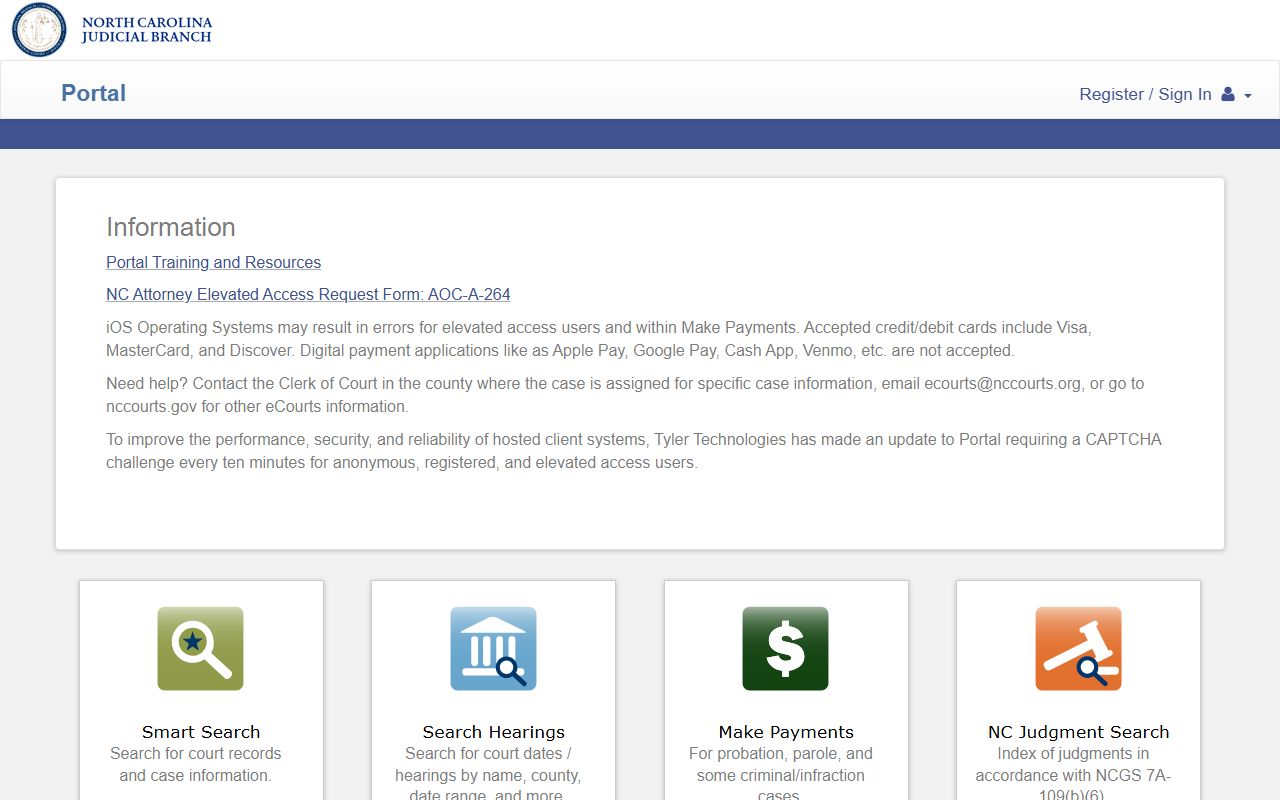
Portal data should be read with the clerk fallback in mind because public online screens are not certified copies.
Lenoir County Dockets and Court Dates
Court-date searches are separate from full case-file searches. The NC court-date search and court calendar system can help find upcoming sessions, while the Portal Search Hearings function can search by location, hearing type, party, case number, attorney, judicial officer, or courtroom. A docket or calendar is the court's schedule. It is not the full case file.
The court-date system is helpful for checking a hearing, but parties should confirm current information with the clerk if a hearing was continued, reset, or recently added. Missing a required court date can trigger additional court action, including a failure to appear entry or an order for arrest in some criminal or traffic matters.
The official court-date page is one of the main public paths for Lenoir County court date lookup.
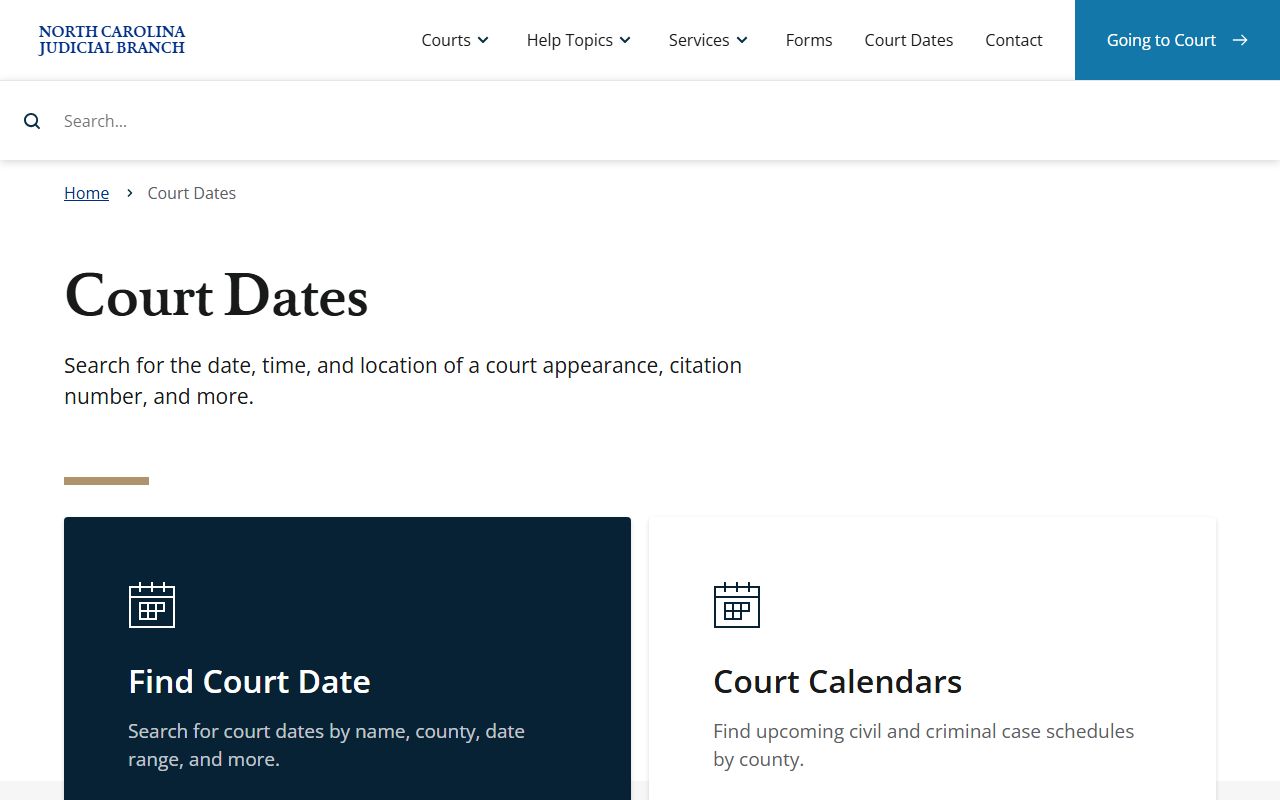
Court-date tools help locate a session, while the clerk remains the source for file copies and official record questions.
Lenoir County Court Access Laws
North Carolina public records are generally open unless a statute creates an exception, but court records and law-enforcement records follow different rules. The clerk maintains court files under the Judicial Branch. The sheriff and police maintain arrest, booking, incident, crash, and investigative records. A court case may be public while parts of an investigative file are withheld.
Key Statutes:
NC Gen. Stat. Chapter 132 states the general public-records rule and exceptions.
NC Gen. Stat. 7A-109 covers clerk maintenance of court records, dockets, indexes, judgments, and related files.
NC Gen. Stat. 132-1.4 limits access to criminal investigation and intelligence records.
NC Gen. Stat. 7B-3000 treats juvenile records as confidential or restricted.
Note: Do not assume all court-related records are online, public, or complete without checking the source office.
Lenoir County Sheriff and Jail
Sheriff Jackie Rogers leads the Lenoir County Sheriff's Office. The office handles civil process, courtroom and county-building security, prisoner transport, drug investigations, sex offender monitoring, law enforcement, 911 response in unincorporated areas, and the county detention center. The W.E. "Billy" Smith Detention Center is the local pretrial jail facility.
No official native Sheriff web roster was found in the research. Custody questions should start with the Sheriff's detention phone channels, NC SAVAN or VINELink notifications, and NC Department of Adult Correction searches for state prison, probation, parole, or historical offender data. MobilePatrol is displayed by the Sheriff's site, but Lenoir-specific in-app warrant or roster fields were not verified.
The Lenoir County Sheriff's Office site collects detention, visitation, account deposit, incident report, and media-policy resources.
Sheriff records can connect to court records, but they are not the same file and may have different access limits.
Lenoir County Marriage Divorce Estates
Marriage licenses and local marriage certificates are handled by the Lenoir County Register of Deeds at 101 North Queen Street in Kinston. Marriage licenses are by appointment only. Divorce case files and divorce judgments are handled through the Clerk of Superior Court, while NC Vital Records issues divorce certificates for 1958-present.
Estate administration is handled by the Clerk of Superior Court because North Carolina clerks serve as probate judges. Probate records may include wills, applications, letters testamentary or administration, inventories, accountings, creditor notices, fiduciary filings, and estate closing papers. Smaller estates may qualify for affidavit, summary administration, or other simplified options when statutory requirements are met.
- Certified copy
- A copy authenticated by the issuing office as official.
- Executor
- A person named in a will to administer an estate.
- Intestate
- Dying without a valid will.
- Letters
- Court papers that give a personal representative legal authority.
Lenoir County Court Record Fees
Fees depend on the office and record type. Clerk copy and certification charges follow statewide court fee law and current fee charts. The Register of Deeds has separate local fees for marriage certificates and vital-record copies. NC Vital Records has its own certificate fees and expedited-service charges.
| Record or Service | Amount |
|---|---|
| Marriage license | $60.00 |
| Marriage certified copy | $10.00 |
| Marriage uncertified copy | $1.00 |
| New estate administration or estate proceeding total | $120.00 |
| Application for administration by Clerk | $20.00 |
| Sheriff civil process service fee | $30.00 |
The Judicial Branch records guide explains the difference between online lookup, clerk files, and official copies.
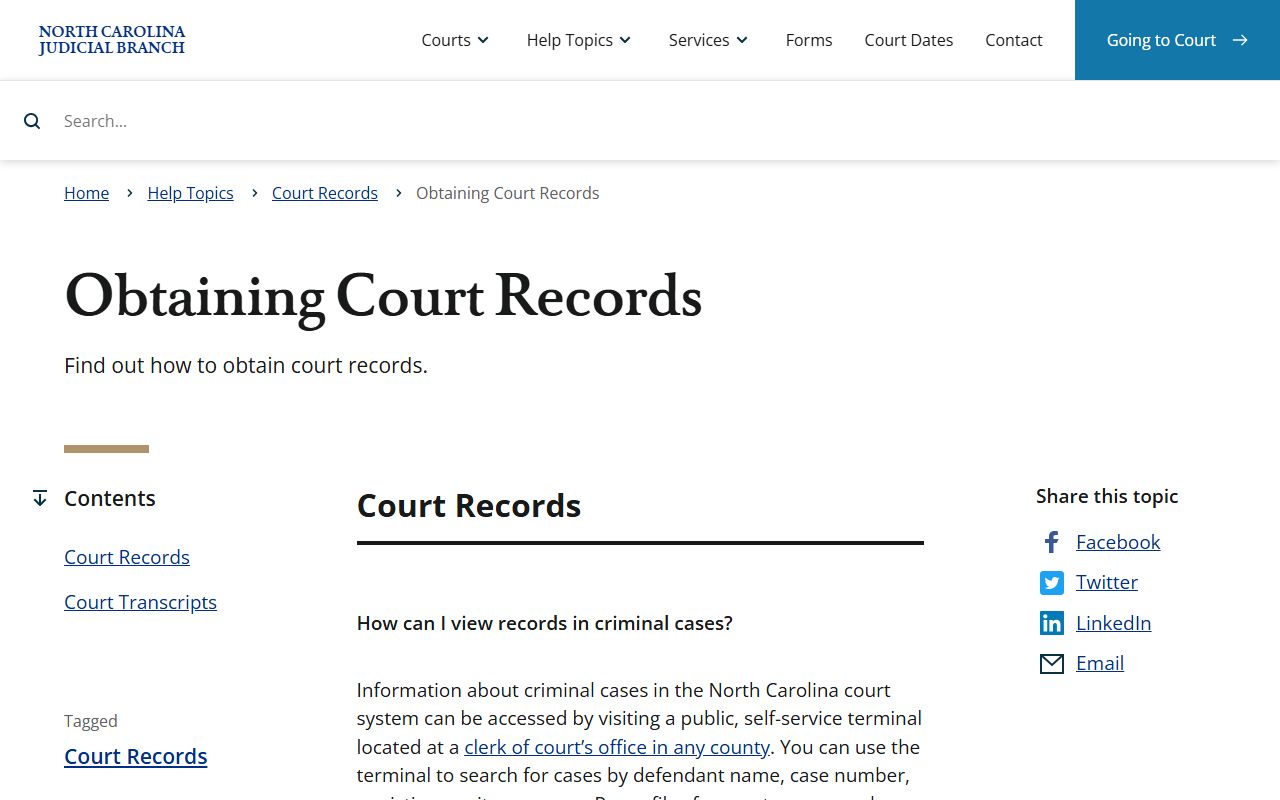
That statewide guidance is the best starting point when the question is not just finding a case, but getting a usable copy.
Lenoir County Federal Court Coverage
Lenoir County is in the U.S. District Court for the Eastern District of North Carolina. Federal civil and criminal records do not sit in the Lenoir County Clerk of Superior Court office. They are searched through federal court systems, including EDNC CM/ECF and PACER. Bankruptcy cases from Lenoir County are in the U.S. Bankruptcy Court for the Eastern District of North Carolina.
Federal appeals from the Eastern District of North Carolina go to the U.S. Court of Appeals for the Fourth Circuit. The U.S. Attorney's Office for EDNC confirms Lenoir County is inside that federal district. For sentenced federal prisoners, use the BOP inmate locator rather than county jail channels.
History of Lenoir County Courts
Lenoir County was chartered in 1791, and Kinston was established earlier as Kingston in 1762. County history says the first courthouse in what is now Lenoir County was built in 1779 at Queen and King Streets and housed the courthouse, prison, and stocks. Today's courthouse remains at the same historic location.
The courthouse and annex are identified in preservation materials as a 1939 courthouse with a later annex. Modern operations still center on the Queen Street site, where the Clerk of Superior Court, Superior Court, District Court, magistrate services, District Attorney functions, and courthouse security are part of the same local court hub.
Lenoir County Court Records FAQ
Can Lenoir County court records be searched online?
Many public case details can be searched through the NC eCourts Portal, especially after the April 2025 eCourts rollout. Older paper files, certified copies, sealed-record questions, and some documents still require the Clerk of Superior Court.
Who keeps official Lenoir County court files?
The Lenoir County Clerk of Superior Court is the local court record custodian. The clerk maintains Superior Court, District Court, estate, judgment, traffic, criminal, civil, domestic, and special proceeding files.
Are arrest records the same as court records?
No. Sheriff and police agencies keep arrest, incident, crash, booking, and investigative records. Court records are the filed case records kept by the Judicial Branch after a court matter opens.
Where are Lenoir County divorce records?
Divorce judgments and case files are court records held through the Clerk of Superior Court. NC Vital Records issues divorce certificates for divorces from 1958-present.