
Lenoir County Arrest Records and Charges
Lenoir County arrest records begin with law enforcement. An arrest record or report may identify the arrested person, arresting agency, incident date, alleged offense, location, report number, custody or booking details, and officer-created facts that the agency is allowed to release. The Sheriff's Office, Kinston Police, and other law-enforcement channels handle this side of the record. Jail custody and booking questions belong with detention and inmate channels, not with the court charge record alone.
Court charges after arrest are different. Once a criminal case moves into court, the record may begin with a warrant, magistrate order, citation, criminal summons, indictment, or other charging document. The District Attorney prosecutes the case for the State, while the Clerk of Superior Court maintains the court file. The full criminal court case file and outcome are covered in more depth on the Lenoir County criminal court records page.
Find Lenoir County Arrest Records
Start by deciding which side of the event is needed. Arrest reports, incident reports, unofficial crash reports, and police narratives come from the agency that made or documented the event. Charges, court dates, disposition, sentence, and costs come from the court case. The NC eCourts Portal is the main court search channel. The Clerk of Superior Court is the fallback for certified copies, older files, restricted-record questions, and case details not available online.
- Use the law-enforcement agency for the arrest report or incident report when the goal is arrest-side detail.
- Use the NC eCourts Portal for the court charge, hearing date, charge status, disposition, and financial entries.
- Search by case number when known, or use the defendant's name and filter the location to Lenoir County.
- Read each charge separately because one arrest can produce several charges with different outcomes.
- Contact the Clerk of Superior Court for certified copies or unclear court records.
- Contact the District Attorney only for prosecution, victim/witness, or case-handling questions, not as the record custodian.
The Lenoir County Sheriff's Office incident report request page is one official channel for sheriff-side report access.
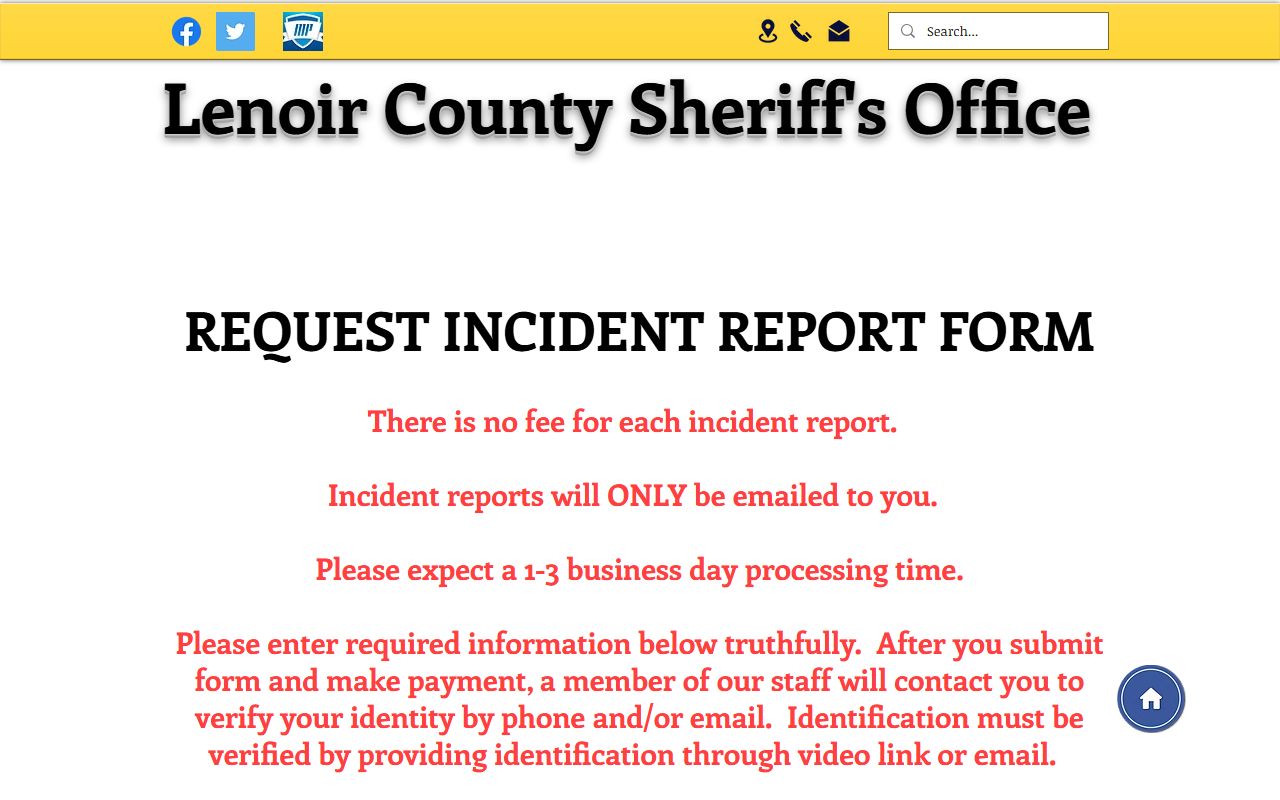
The sheriff request path is useful for reports, but it does not replace the court record that shows the filed charge and final disposition.
Lenoir County Charges After Arrest
Charges after arrest are shown through charging papers and later case events. North Carolina criminal matters may start with documents such as a citation, warrant, magistrate order, criminal summons, indictment, or other court filing. The complaint, information, and indictment comparison helps explain how charges can move from accusation to formal prosecution, even though North Carolina local practice may use warrants, citations, magistrate orders, summonses, and indictments in the court file.
| Document | Who Uses It | What It Does |
|---|---|---|
| Complaint | Officer, complainant, or prosecutor depending on process | States facts or allegations that support starting or supporting a criminal charge. |
| Information | Prosecutor | Formal prosecutor-filed charge document used in some criminal systems and contexts. |
| Indictment | Grand jury process | Formal felony charging document that can move a case into Superior Court. |
In Lenoir County, the practical court-facing record can also show a warrant, magistrate's order, citation, criminal summons, or indictment. These records may list the charge description, statute number, offense date, arresting agency, bond amount, court date, plea, disposition, and sentence where public.
Lenoir County Arrest Charge Status
A charge status can change as the case moves. The first charge is not always the last charge. Prosecutors may amend a charge, reduce it during plea negotiations, dismiss it, proceed on a different count, or obtain an indictment in Superior Court. The court record should be read by charge, not just by case number, because one case can contain multiple charges with different dates and outcomes.
| Status | What It Means |
|---|---|
| Pending | The charge remains open and has not reached final disposition. |
| Amended | The charge text, statute, level, or count has changed in court. |
| Reduced | The charge was lowered to a lesser offense or level, often through plea or prosecutorial review. |
| Dismissed | The charge was ended without a conviction on that count. |
| Guilty / Responsible | The charge resulted in a guilty plea, guilty finding, or responsibility finding. |
| Not Guilty / Not Responsible | The court found the person not guilty or not responsible on that charge. |
Lenoir County Kinston Arrest Reports
Kinston Police has several official channels that help with the law-enforcement side of Lenoir County arrest records. The city provides a public records request form for incident reports, arrest reports, and unofficial crash reports. It also provides an online incident report form for citizen reporting inside Kinston city limits. These are police-report tools. Court charges after arrest still need to be checked through the court case record and the Clerk of Superior Court.
The Kinston Police online incident report form is assigned to this arrest-and-charge topic because it shows one city-law-enforcement reporting path.
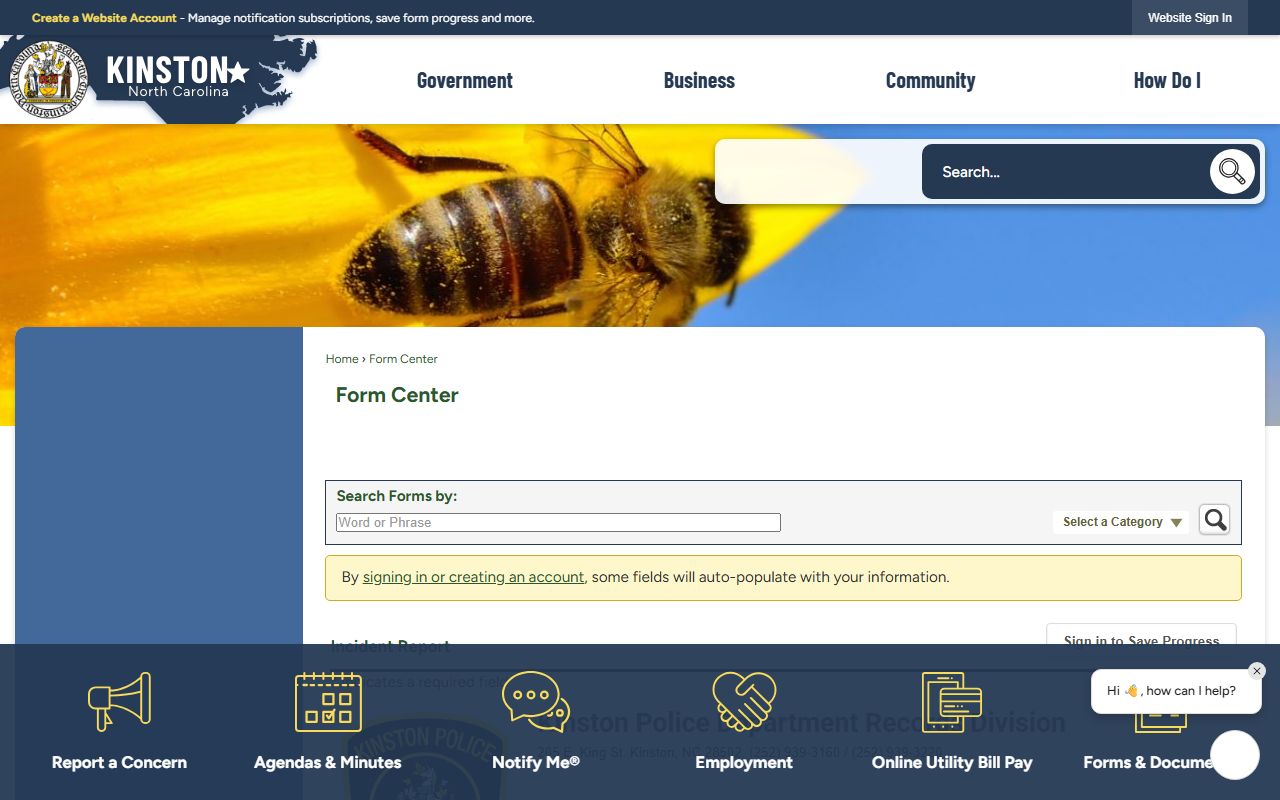
An incident report can create or support later law-enforcement action, but a formal charge must be checked in the court record.
Kinston Police also maintains a Most Wanted channel.
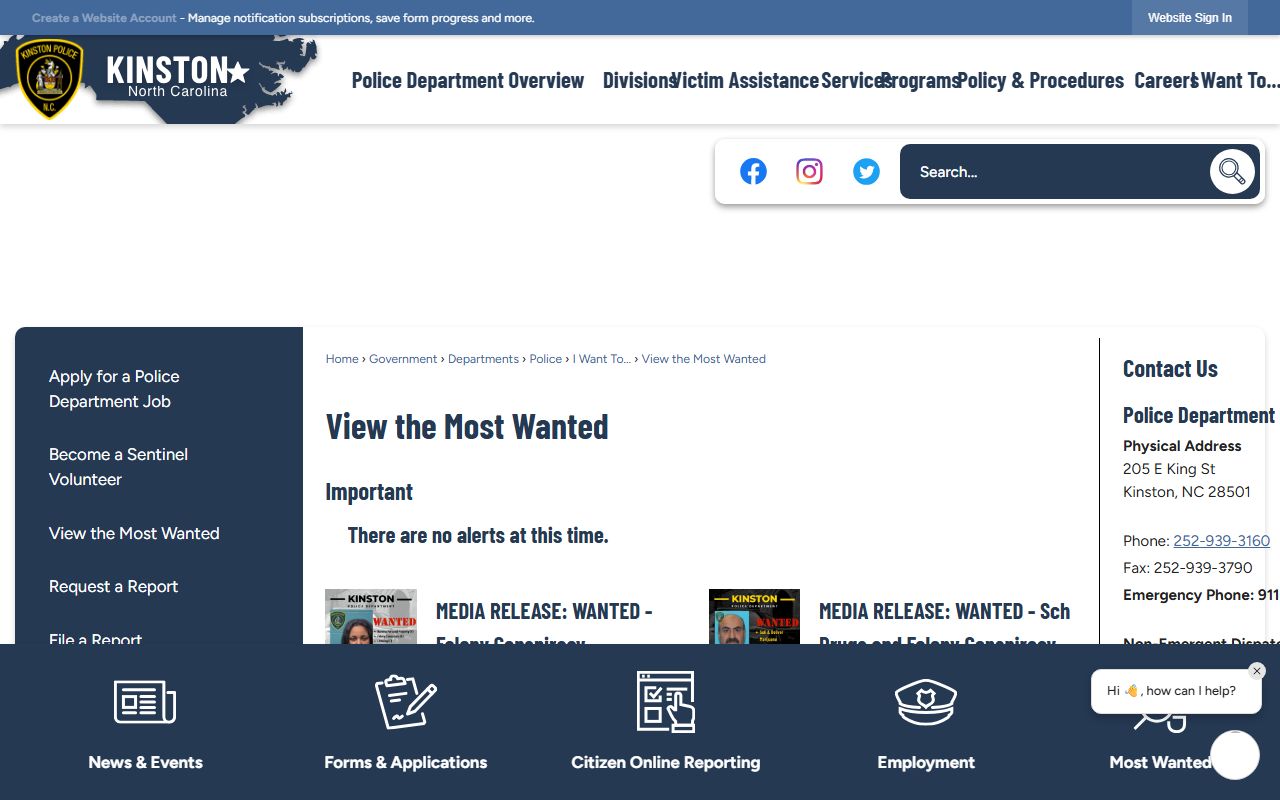
Most-wanted information is a law-enforcement notice and should not be treated as a complete court-charge history or conviction record.
Lenoir County Law Enforcement Access
Kinston Police uses KPD iWitness Community Connect as a web-based tip and report-assist channel, with categories such as Wanted Person, Missing Person, Suspicious Activity, Drugs, Noise or Welfare Check, and Other. Kinston notes that the iWitness platform is not monitored in real time. Emergency matters should go to 911. Tips are not court records and do not prove that a charge was filed.
The Kinston Police iWitness page explains the local web-tip platform.
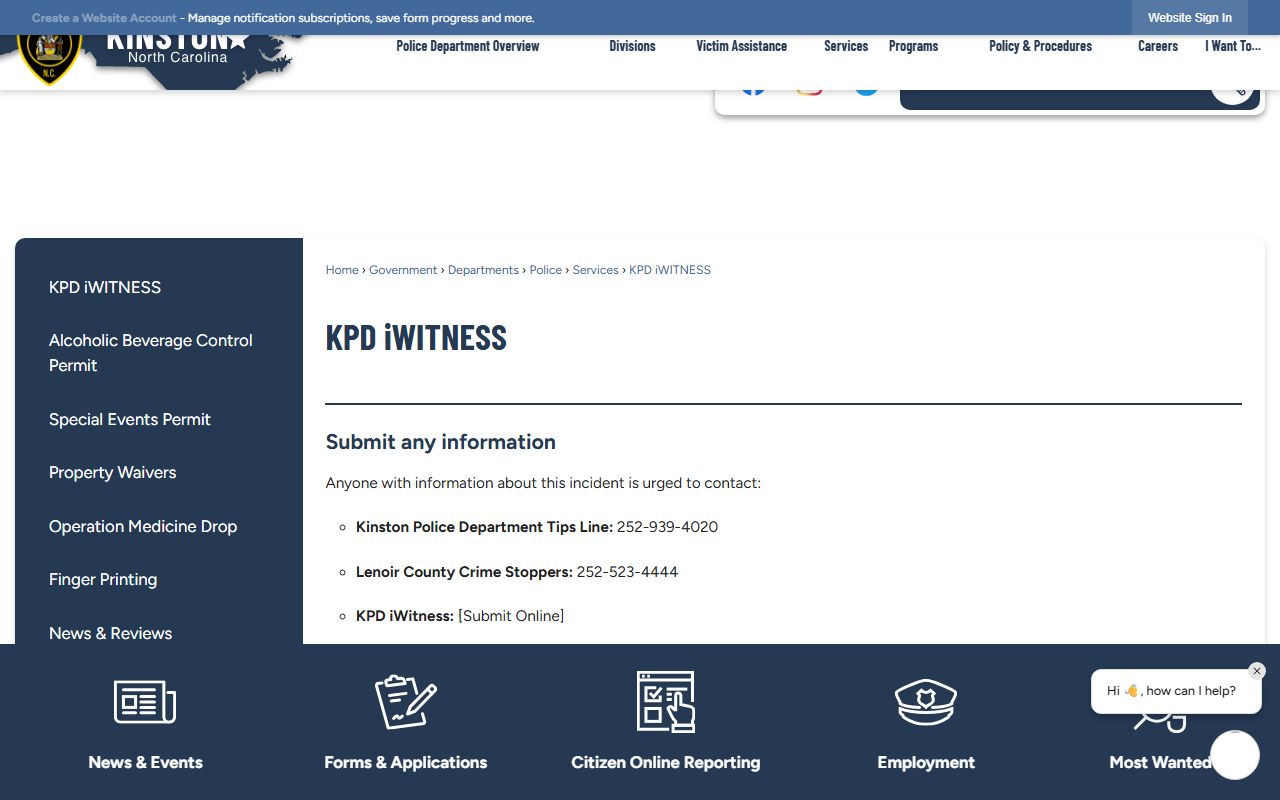
iWitness can help law enforcement receive information, but court charge status must be verified through the court case or clerk.
The KPD iWitness Assistant is the related online tool assigned to this record topic.
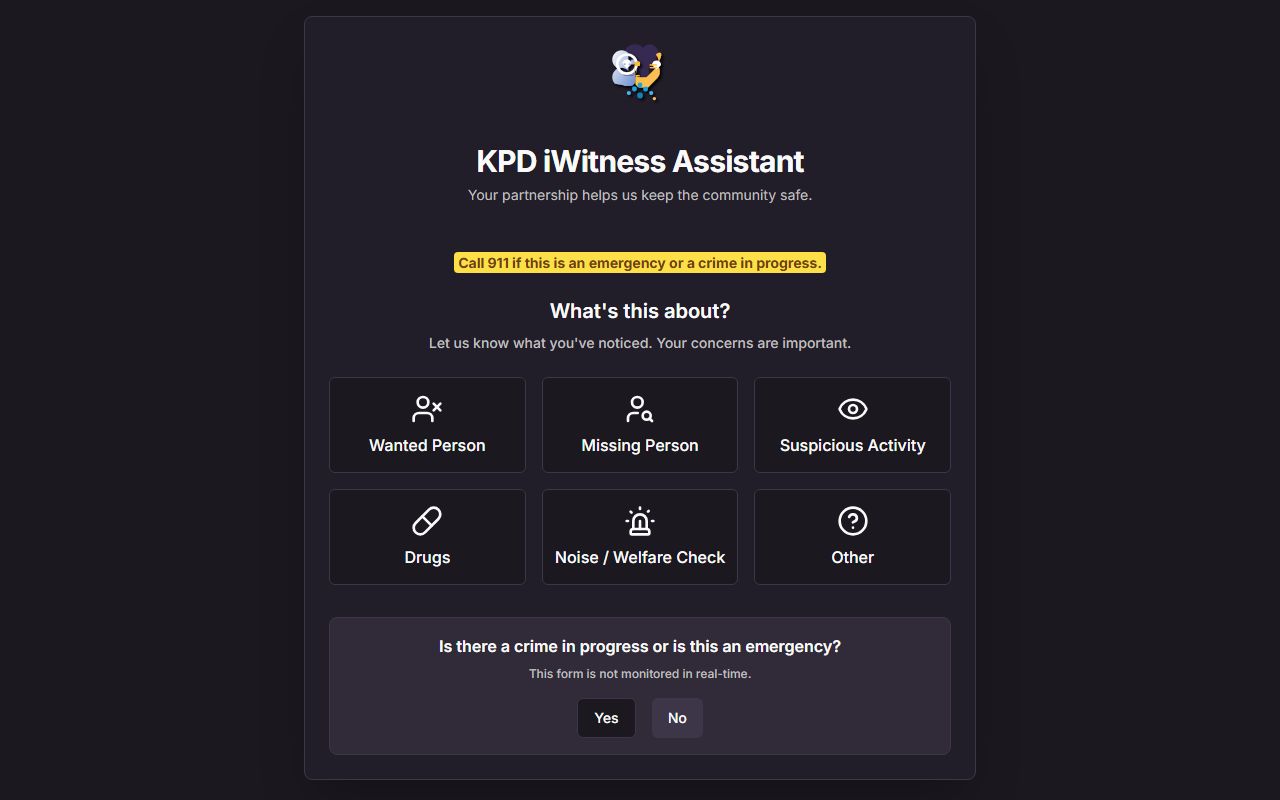
The assistant is useful for tip routing and public-safety reports, not for certifying whether a charge led to conviction or dismissal.
Lenoir County Agency Access
Law-enforcement access varies by municipality. La Grange law enforcement is provided by contract with the Lenoir County Sheriff's Office, with coverage by deputies and a La Grange Patrol Division field office. That means La Grange arrest or incident questions may route through the sheriff rather than through a separate local police department. Pink Hill has a local police department with Chief Michael Hoffman listed in the research, and the town page provides the local police contact point.
The La Grange law-enforcement page is assigned here because it explains the sheriff contract model.
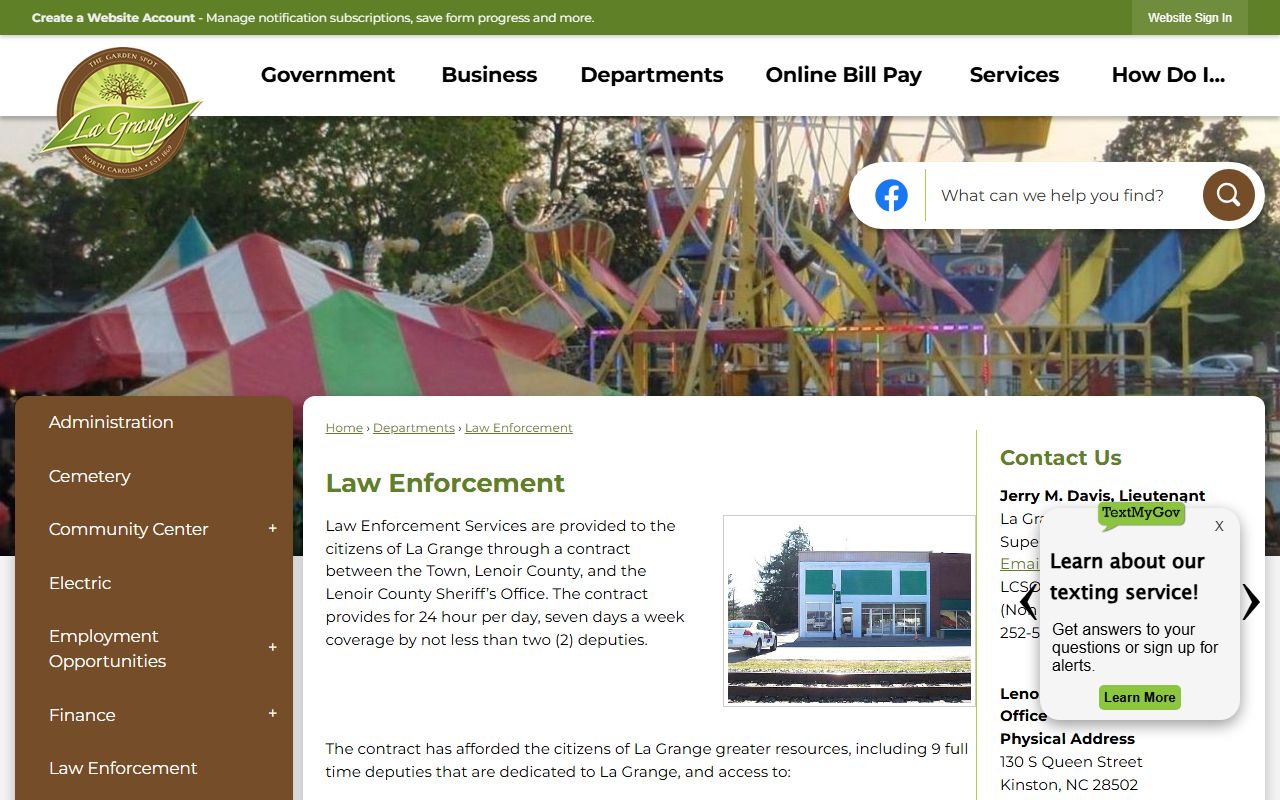
For La Grange matters, the sheriff contract context helps identify which agency may hold the arrest-side record before the court charge is checked.
Lenoir County Charges vs Convictions
An arrest record or charge record does not prove conviction. The charge is the accusation that starts or supports the court case. A conviction is a final guilty outcome by plea or verdict. Dismissed, amended, reduced, not-guilty, and pending charges need careful reading because they can remain visible in the case history without meaning the person was convicted of the first charge filed.
| Point | Charge | Conviction |
|---|---|---|
| Record stage | Appears after arrest, citation, warrant, summons, or indictment | Appears after plea, trial, or judgment |
| Meaning | The State alleges an offense | The court has accepted or found guilt |
| Best field to read | Charge description, statute, level, and status | Disposition, judgment, sentence, and costs |
| Common mistake | Treating accusation as the final result | Ignoring charge-by-charge outcomes in the same case |
Lenoir County Charge Review
The District Attorney represents the State in criminal prosecutions. For Lenoir County, the District Attorney's Office is in North Carolina Prosecutorial District 9, which covers Greene, Lenoir, and Wayne counties. The current DA listed in the research is Matthew Delbridge. Law enforcement may arrest or seek process, and magistrates may issue warrants or handle first appearances, but the DA controls prosecution decisions in court.
The DA is not the court-record custodian. Use the Clerk of Superior Court for the file, docket, certified copy, disposition, judgment, and court costs. Use the DA for prosecution-related matters, victim/witness concerns, and questions that belong to the State's handling of a pending criminal case.
District Attorney, Prosecutorial District 9
Greene, Lenoir, and Wayne counties
Local directory phone: 252-520-5400
District office phone: 919-722-6200
Mail: PO Box 175
Goldsboro, NC 27533
Lenoir County Clerk of Superior Court
130 S Queen St
Kinston, NC 28501
252-520-5300
Records, certified copies, docket access, and court files.
Restricted Lenoir County Charge Records
Some arrest and charge information is restricted. Juvenile records are confidential under North Carolina law. Expunged records are removed from ordinary public access after the court grants and processes an expunction order. Sealed records may be closed by statute or court order. Criminal investigation and intelligence records have special limits, and law enforcement may withhold narratives, sex-offense victim-identifying information, juvenile names and addresses, locked or sealed cases, certain suicide information, house-check information, and child-abuse information.
| Point | Sealed | Expunged |
|---|---|---|
| Access | Closed or limited by order or law | Removed from ordinary public access |
| Typical trigger | Confidential case type, protected data, or court order | Eligibility under a North Carolina expunction statute and court approval |
| Public search | May show limited detail or no document | May show no ordinary public result after processing |
| Where to ask | Clerk of Superior Court | Clerk of Superior Court and official expunction forms |
Note: A missing public result can mean no case, a search mismatch, a restricted file, or an expunged record.
Lenoir County Charge Lookup Limits
Statewide searches can help with broader criminal-history context, but they do not replace the local Lenoir County court file. NC eCourts is the court case lookup for public case information. NC Department of Adult Correction search tools relate to state prison, probation, parole, and offender history, not a county jail roster. The NC SBI sex offender registry is a specialized registry, not a full criminal-history search. For custody-notification purposes, NC SAVAN and VINELink are notification channels, not court-charge records.
For arrest-side questions, use the sheriff, Kinston Police, Pink Hill Police, or the sheriff-contracted La Grange channel that fits the event. For filed charges and outcomes, use the Portal and Clerk of Superior Court. For the full custody or jail roster topic, the Lenoir County inmate records page covers detention-specific access paths.